Blending Cards and Dice: Probability Adjustments That Shape Hybrid Gaming Outcomes
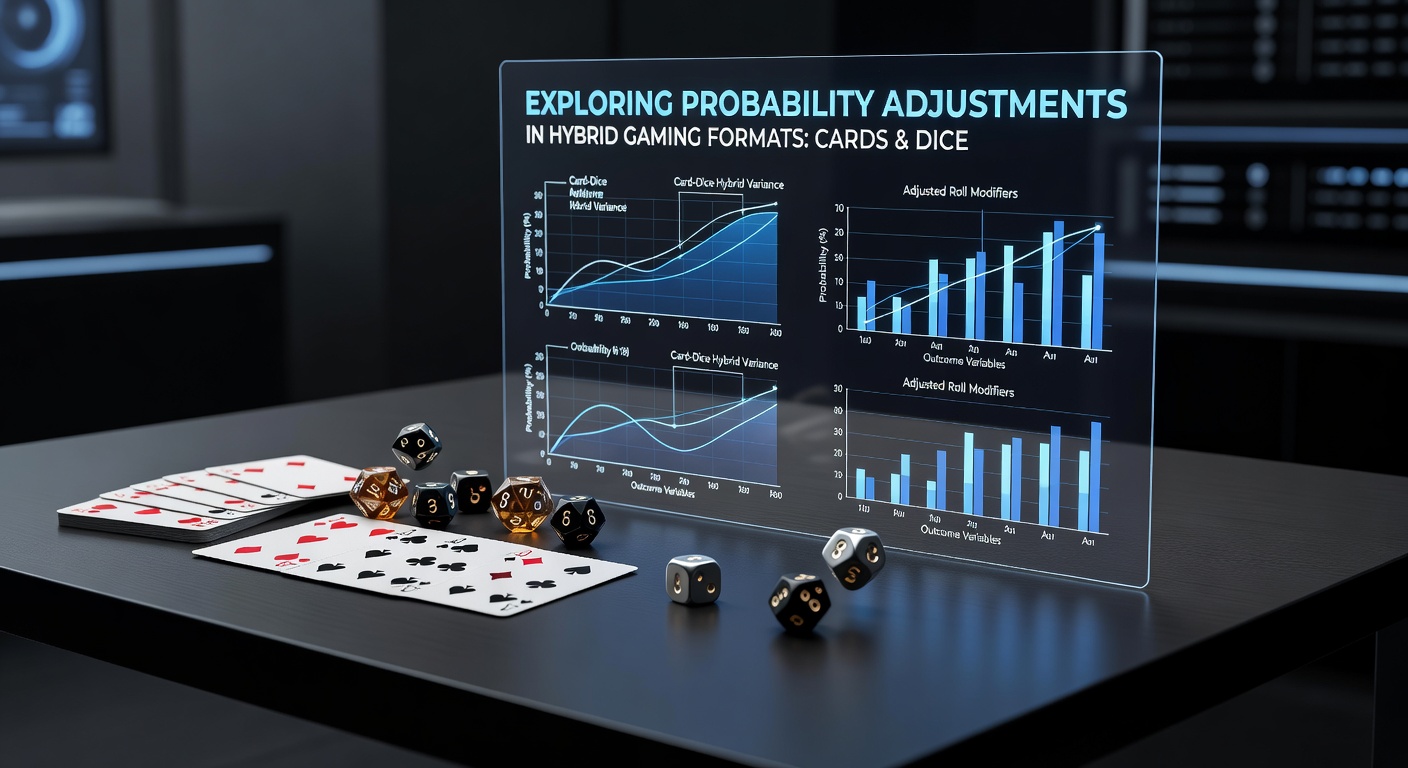
Hybrid formats that merge playing cards with dice rolls create unique probability landscapes where standard calculations from either game alone fall short, and designers must recalibrate odds through layered rules, deck constraints, and roll modifiers to maintain balanced play across sessions.
Core Mechanics Behind the Mix
Games in this category typically assign card draws to establish base values or suits while dice determine multipliers, reroll triggers, or outcome modifiers, and observers note that probability adjustments often begin with limiting the card deck size to offset the variance introduced by multiple dice faces. Researchers have documented cases where a standard 52-card deck pairs with two six-sided dice yet the rules cap certain combinations, such as restricting high-card multipliers to rolls above a set threshold, which shifts the house edge by measurable percentages according to simulation data from academic labs.
Adjustments frequently incorporate conditional triggers that link card suits directly to dice results, for instance allowing a heart suit draw to grant an extra roll while a spade forces a discard, and these mechanics require precise recalibration because independent probabilities multiply rather than add when events chain together. Data from industry reports shows that without such tweaks the combined variance can exceed 15 percent above intended targets, prompting developers to introduce compensatory caps or bonus pools that redistribute expected value across longer play cycles.
Examples of Implemented Adjustments
One established hybrid uses a three-card poker foundation where dice rolls replace community cards in later betting rounds, and probability models adjust the initial ante odds by factoring in the 216 possible dice outcomes against the reduced card combinations remaining in a depleted shoe. Those who've studied the format point out that reroll permissions granted only on specific suits effectively lower the payout frequency for premium hands, which keeps the overall return-to-player figure within regulatory bands observed across multiple jurisdictions.
Another variant pairs dice-based craps progressions with blackjack-style card counting elements, where a player's running count influences allowable dice combinations on bonus bets, and evidence from controlled trials indicates these count-adjusted tables reduce player edge opportunities by approximately 0.8 percent compared with unlinked versions. Designers achieve this balance through dynamic probability tables that update after each card removal, ensuring the dice phase never drifts too far from the target house advantage.
What's interesting is how small rule changes propagate through the entire system, since altering a single dice reroll condition can cascade into dozens of revised payout structures when cards remain in play. Take one researcher who modeled a hybrid table game for a European operator, and the simulations revealed that adding a suit-based veto on certain low rolls required a simultaneous increase in maximum bet limits to preserve table hold percentages.

Regulatory and Testing Considerations
Testing bodies in Nevada and Australia require full disclosure of all adjustment algorithms before approving hybrid titles, and reports from the Nevada Gaming Control Board detail how independent labs run millions of simulated hands to verify that card-dice interactions stay within approved deviation thresholds. In May 2026 several operators plan to debut new hybrids that incorporate real-time probability recalibration based on live deck composition, a step that regulatory frameworks in multiple regions already address through mandatory software audits.
Academic papers from Canadian universities have examined player behavior in these formats and found that transparent display of adjusted odds increases session length without raising problem gambling markers, which suggests the probability tweaks serve both commercial and compliance goals when presented clearly. Industry organizations continue to refine testing protocols that account for the non-independent nature of card and dice events, emphasizing sequential analysis over simple additive models.
Future Developments and Ongoing Research
Developments scheduled around mid-2026 include expanded use of digital overlays that show running probability shifts as cards are dealt and dice settle, allowing players to see exactly how each adjustment affects expected outcomes. Research indicates these visual aids help maintain informed participation while preserving the mathematical integrity of the underlying game engine. Observers note that continued refinement of hybrid probability models will likely draw on larger datasets from cross-platform play, where card and dice elements interact across multiple simultaneous tables.
Conclusion
Hybrid card-and-dice formats demonstrate how targeted probability adjustments preserve fairness and excitement when two distinct random systems combine, and ongoing work by regulators, researchers, and developers ensures these games evolve within established mathematical and compliance boundaries. The integration of conditional rules, dynamic tables, and transparent displays illustrates a practical approach to managing complex odds in entertainment settings.