Connecting Session Length Planning with Game Selection in Digital Casino Platforms
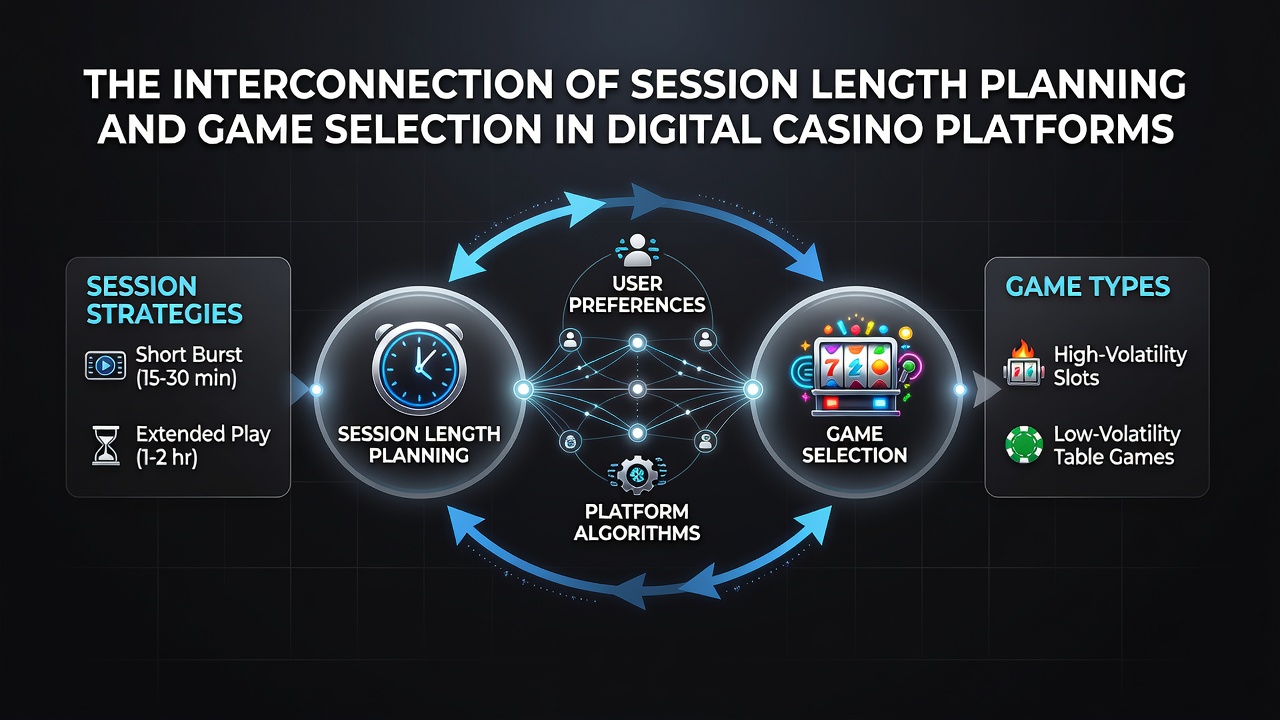
Digital casino platforms present players with tools that tie session length planning directly to game selection processes, and operators design these features to align time commitments with specific game characteristics. Data from multiple jurisdictions shows that structured approaches to session duration influence choices around volatility levels, return-to-player percentages, and pace of play. Platforms track these patterns through analytics that reveal how shorter sessions often correlate with selections featuring higher variance, while extended periods draw users toward steadier options with lower house edges over time.
Elements of Session Length Planning
Session length planning involves setting predefined time boundaries before engaging with casino software, and this practice draws from bankroll allocation models that divide total funds across planned intervals. Operators integrate timers and reminders into account dashboards, allowing users to input target durations that then trigger suggestions for compatible titles. Research from the Australian Gambling Research Centre indicates that players who establish these parameters in advance demonstrate measurable shifts in game preferences, particularly when platform algorithms highlight titles matching the selected timeframe.
June 2026 brought updates to several international platforms where session planning modules began incorporating real-time data feeds from regulatory bodies in multiple regions, including metrics shared by the Nevada Gaming Control Board and the Ontario Lottery and Gaming Corporation. These integrations help refine recommendations so that a planned 30-minute window surfaces different options than a three-hour commitment, based on aggregated user behavior across millions of sessions.
Game Selection Criteria in Digital Environments
Game selection on digital platforms rests on measurable attributes such as volatility ratings, hit frequencies, and bonus round structures, with each element carrying distinct implications for different session lengths. High-volatility slots, for instance, deliver infrequent but substantial payouts that align with brief sessions where users seek concentrated risk exposure. Lower-volatility table games and video poker variants instead favor extended play because their steadier return patterns reduce variance across hundreds of hands or spins.
Platform interfaces present these attributes through filter systems and information panels, enabling users to sort titles by average session duration data compiled from prior plays. Figures released by the Canadian Gaming Association show that selections cluster around specific volatility bands when users apply duration filters, with short-session users gravitating toward titles whose median completion times fall under 45 minutes.
The Direct Links Between Duration Planning and Game Choices
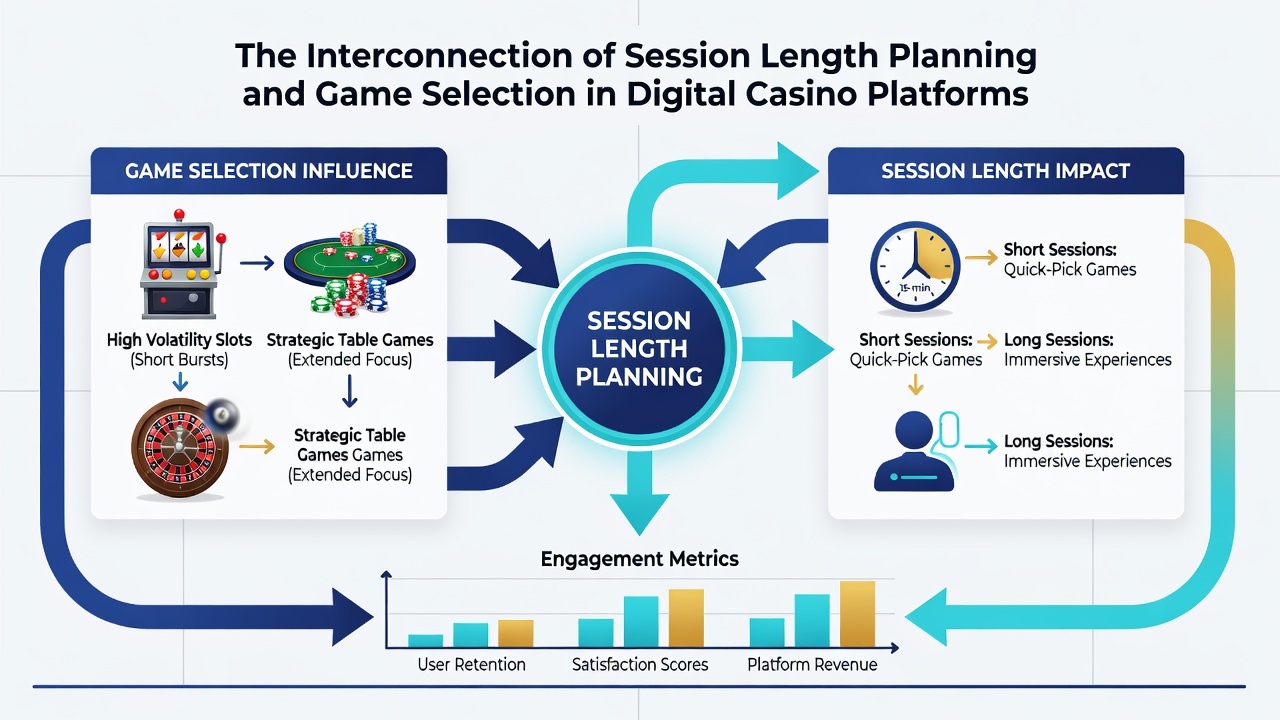
The interconnection emerges most clearly when platforms use session planning inputs to adjust game discovery pathways, and this mechanism operates through recommendation engines that cross-reference planned time with historical performance data. A user entering a 20-minute limit encounters prompts for games with rapid spin cycles and elevated variance, while longer entries surface titles with progressive jackpots or multi-stage bonus features that unfold over extended sequences.
Studies conducted by researchers at the University of Nevada, Reno, document how these automated connections shape outcomes, revealing that players adhering to planned durations select games whose mathematical profiles match the allotted time more frequently than those without preset limits. The same reports note that June 2026 platform updates strengthened these links by embedding predictive models trained on regional datasets from Europe and North America.
Observers note that live dealer sections and progressive slots often appear in longer-session pathways because their communal or accumulating elements reward sustained participation, whereas instant-win scratch cards and crash games dominate shorter-session suggestions. This alignment reduces mismatch between intended play time and the natural rhythm of chosen games.
Platform Features Supporting These Connections
Modern digital casinos embed session planning directly into lobby navigation, and users encounter duration-based categories alongside traditional genre groupings. These features draw from backend systems that aggregate playtime statistics across user bases, then surface titles whose average engagement lengths correspond to the selected parameter. Industry reports from the European Gaming and Betting Association highlight how such categorization improves retention metrics by matching users with suitable experiences from the outset.
Additional tools include adjustable autoplay limits calibrated to session targets and volatility meters that update dynamically based on remaining time. When a planned session nears its end, platforms trigger notifications that can redirect users toward quicker-resolution games if they choose to extend slightly, maintaining the original planning framework rather than overriding it.
Conclusion
The relationship between session length planning and game selection continues to evolve through platform design choices and regulatory data sharing across regions. Users who apply duration parameters encounter filtered options that reflect volatility, pace, and payout structures suited to their timeframe. Data compiled through 2026 demonstrates consistent patterns where these interconnections guide selections without requiring manual cross-referencing, and ongoing refinements from international sources keep the systems aligned with observed behaviors.