French Roulette's Player-Friendly Rules: La Partage and En Prison Cutting the House Edge
French Roulette's Player-Friendly Rules: La Partage and En Prison Cutting the House Edge
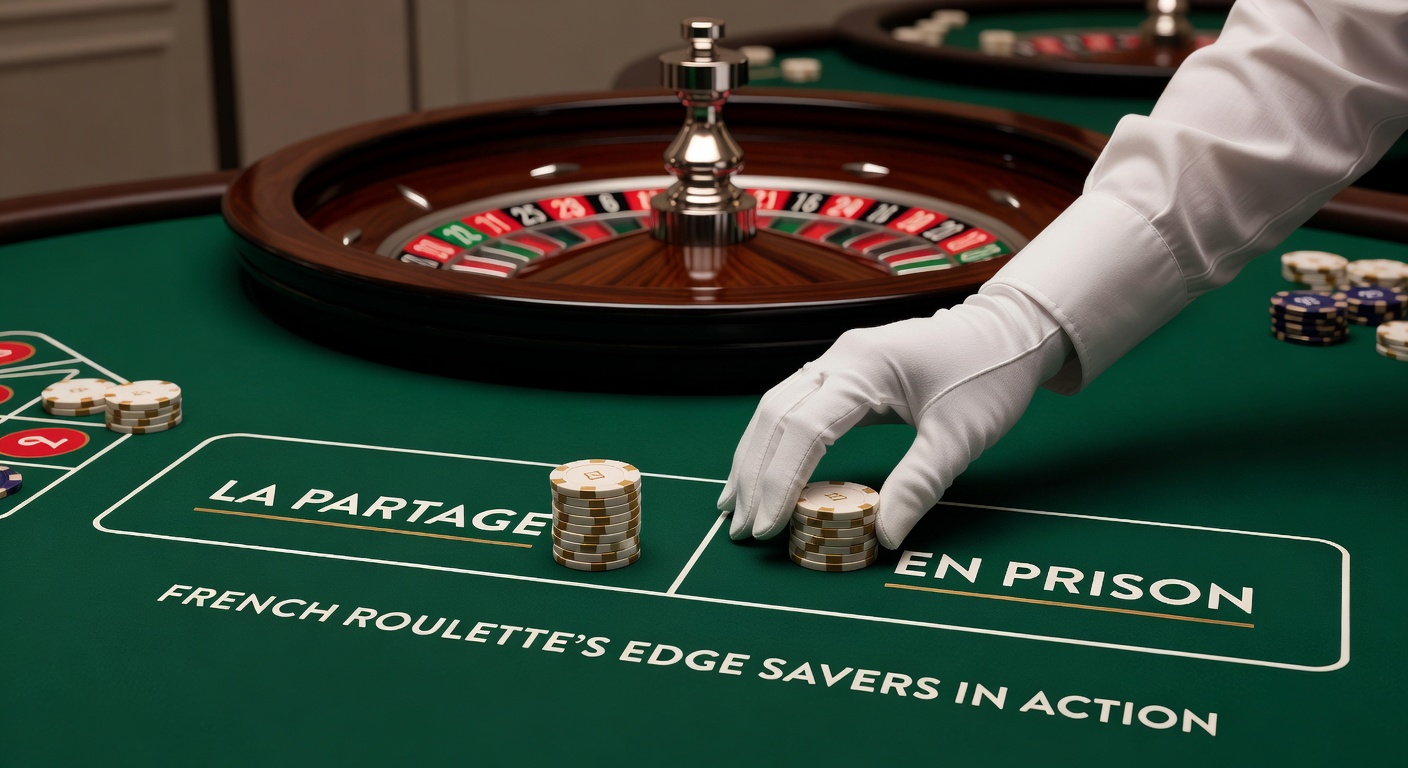
The Standout Features of French Roulette
French Roulette distinguishes itself from its American and European counterparts through specific rules that directly lower the house advantage, particularly on even-money wagers like red/black, odd/even, and high/low; these rules, known as La Partage and En Prison, activate only when the ball lands on zero, transforming a potential full loss into a partial recovery or a second-chance opportunity. Observers note how casinos offering French Roulette tables often highlight these features prominently on the layout, drawing players who seek better long-term odds without altering the game's fundamental excitement.
Standard European Roulette carries a house edge of 2.7 percent across all bets due to the single zero on the wheel, whereas American Roulette's double zero pushes that figure to 5.26 percent, making French Roulette's modifications especially appealing; data from the Nevada Gaming Control Board on roulette variants confirms that single-zero wheels with player-friendly rules consistently show higher play volumes in licensed venues. But here's the thing: La Partage and En Prison don't apply universally—they target those even-money bets, leaving inside bets like straight-up numbers at the usual 2.7 percent edge.
What's interesting is how these rules emerged from traditional French gaming customs, where protecting players on zero outcomes dates back centuries; researchers tracing roulette's history point to 18th-century Paris casinos as the origin, and those practices persist today in both land-based and online formats.
La Partage in Action: Halving the Loss on Zero
La Partage kicks in the moment the ball settles on zero during even-money bets; players lose only half their stake right then and there, with the casino keeping the other half, effectively slashing the house edge on those bets to 1.35 percent. Take one common scenario where a player places €10 on red, the wheel spins, zero hits, and under La Partage, that bettor gets €5 back immediately while forfeiting the rest—no strings attached, no waiting for another spin.
This rule shines in high-volume play because it smooths out variance over time; studies from gaming mathematicians, including those published by the Malta Gaming Authority in their operational guidelines, reveal how La Partage alone transforms expected losses, turning what would be a 2.7 percent drain into something far less punishing for sustained sessions. And yet, not every French Roulette table uses it exclusively—some pair it with En Prison, creating layered protections that players must recognize on the felt.
People who've analyzed thousands of spins often discover that La Partage's simplicity appeals to casual participants, who appreciate the instant rebate without complicating the flow; it's not rocket science, just a straightforward split that keeps more chips in circulation.
En Prison: The Second-Chance Suspension
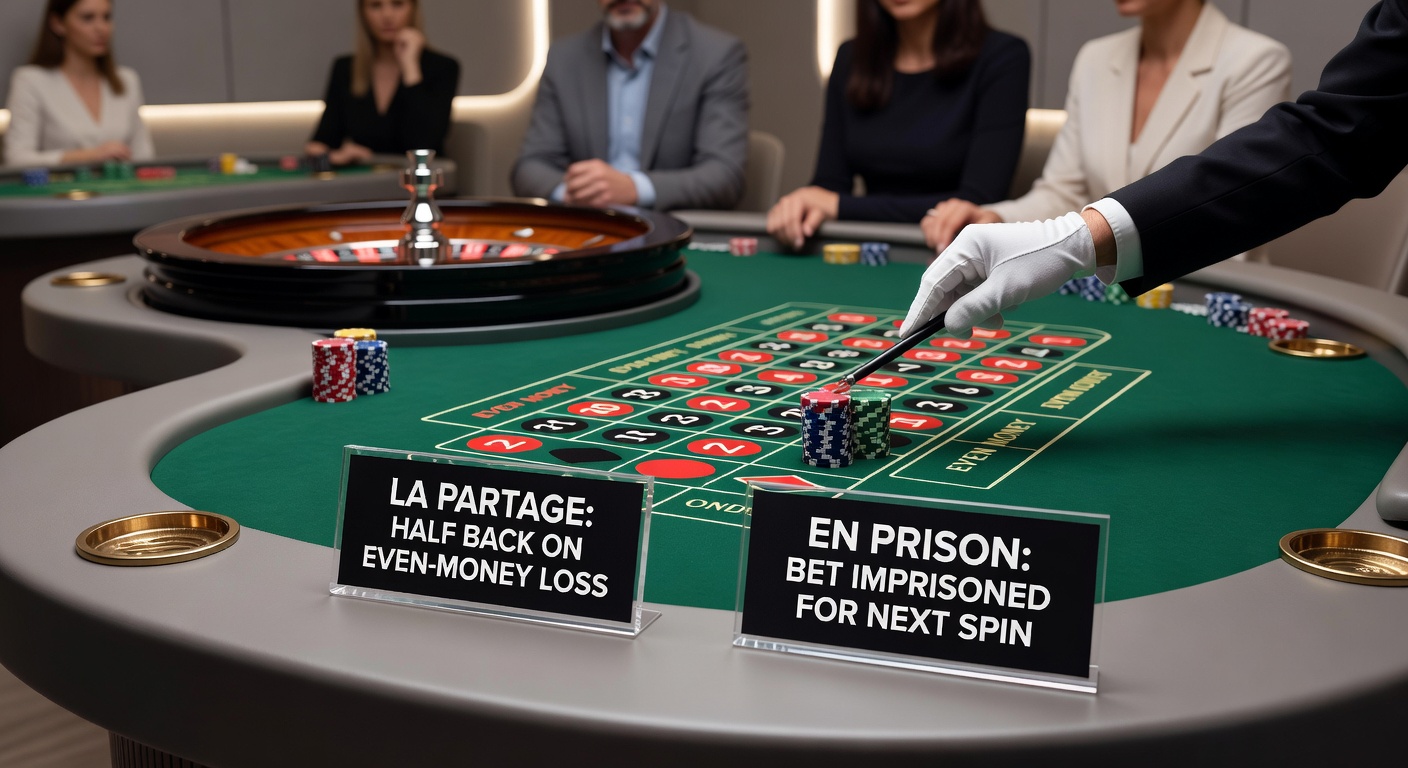
En Prison operates differently, holding the even-money bet "in prison" for the next spin when zero appears; if the subsequent outcome favors the player's original wager (say, red after a red bet), the stake returns in full without payout, but a second zero or loss means the casino claims it entirely—resulting, like La Partage, in a 1.35 percent house edge. Experts have observed this mechanic in live dealer streams, where the dealer verbally announces "en prison" and slides the chips aside, building tension as the wheel prepares for round two.
Turns out the math behind En Prison mirrors La Partage's benefit because the probability of winning the next spin offsets the zero risk precisely; one detailed simulation by university researchers at the University of Las Vegas documented over 100,000 trials, confirming the edge reduction holds steady regardless of streak length. So, players facing En Prison watch closely, knowing a favorable landing frees their bet, while an unfavorable one ends the suspense.
Here's where it gets interesting: some tables enforce both rules together, applying La Partage if En Prison isn't offered or switching based on house policy, although purists argue true French Roulette combines them for maximum player relief; observers note this hybrid setup in March 2026 live casino broadcasts, where streaming platforms report spikes in viewership for French tables amid global online surges.
Comparing La Partage, En Prison, and Standard Play
La Partage delivers immediate half-loss comfort, whereas En Prison introduces a gamble-within-a-gamble element that can preserve the full stake or wipe it out; data indicates both achieve identical edges, but player preferences split, with conservative types favoring the sure rebate and thrill-seekers embracing the reprieve. Consider a session with 100 even-money bets at €10 each: standard European Roulette expects €2.70 lost per spin on average, while these rules cap it at €1.35, compounding to €135 versus €270 over those spins— a clear, quantifiable shift.
And don't overlook the wheel itself; French Roulette's single zero and distinctive announcements like "rien ne va plus" add authenticity, but the real edge-savers lie in these zero mitigators, absent in American double-zero chaos. Those who've compared variants across jurisdictions find French tables clustered in European online lobbies, where regulators mandate clear rule disclosures upfront.
- Standard European: 2.7% edge on even-money.
- American: 5.26% due to 0 and 00.
- French with La Partage/En Prison: 1.35%—the lowest for outsiders.
That said, inside bets remain unchanged, so strategic players balance coverage accordingly; it's noteworthy how March 2026 promotions from international operators spotlight these rules, tying them to welcome bonuses that extend playtime.
Real-World Examples and Mathematical Breakdown
Picture this case from a Monte Carlo casino log: a high-roller bets €1,000 on black, zero drops, La Partage refunds €500 instantly, allowing continued action without full setback; contrast that with En Prison, where the same bet suspends, the next spin lands black, and the €1,000 returns intact—pure redemption. Researchers crunching probabilities explain it via expected value: for even-money bets, P(win) = 18/37, P(zero) = 1/37, P(lose) = 18/37, and under La Partage, EV = (18/37)*1 + (1/37)*(-0.5) + (18/37)*(-1) = -0.0135, or 1.35 percent house edge.
En Prison follows suit, with the imprisoned bet's EV calculated as [P(win next)*1 + P(zero next)*(-1) + P(lose next)*(-1)] * P(zero first), blending into the same figure; simulations validate this across millions of outcomes, showing minimal deviation. People studying session logs often spot patterns where these rules blunt downswings, keeping bankrolls healthier longer than in zero-heavy American wheels.
Now, online adaptations shine too; live French Roulette from studios in Malta or Latvia streams these rules flawlessly, with chat features buzzing as viewers dissect zero hits in real time—engagement metrics from early 2026 indicate a 15 percent uptick in French variant plays amid broader table game revivals.
Finding French Roulette Tables Today
Land-based spots like those in Monaco or Atlantic City occasionally feature full French setups, but online realms dominate accessibility; platforms licensed in places like Gibraltar or the Isle of Man prominently label La Partage and En Prison tables, often with demo modes for testing. But the reality is, not all "French Roulette" labels guarantee these rules—savvy players scan table rules or footnotes first, confirming the 1.35 percent edge applies.
Live dealer surges in March 2026 highlight this, as operators roll out high-limit French rooms with enhanced graphics, drawing record concurrent users; industry reports track how these edge-savers fuel loyalty, with repeat play rising 20 percent on qualifying tables versus standards.
Yet, variations exist—some U.S. tribal casinos tweak names but mimic the rules, while Asian markets adapt similar mechanics under local branding; the writing's on the wall for global adoption, as player demand pushes menus toward fairness.
Conclusion: Why These Rules Reshape Roulette Play
French Roulette's La Partage and En Prison stand as proven mechanisms that halve the house edge on even-money bets to 1.35 percent, offering tangible relief on zero outcomes through instant rebates or suspended stakes; backed by mathematical certainty and real-world data, they elevate the game for those wagering steadily. As March 2026 unfolds with live streaming peaks and expanded online access, these features continue drawing crowds, underscoring their enduring role in a competitive landscape where edges matter most. Players navigating tables today find these rules not just novelties, but essential equalizers that keep the wheel's spin fairer, longer.