Hi-Lo Counting Unveiled: Step-by-Step Path to Shifting Blackjack Odds in Your Favor
Hi-Lo Counting Unveiled: Step-by-Step Path to Shifting Blackjack Odds in Your Favor
Blackjack Basics and the Allure of an Edge
Blackjack stands out in casinos because the house edge hovers around 0.5% under optimal play, yet skilled players flip that script through techniques like card counting; observers note how this method tracks high and low cards to inform betting decisions, turning the game's inherent volatility into a predictable advantage over time. Data from simulations reveals that consistent counters can achieve a 1-2% player edge, although casinos counter with multiple decks and shuffles. And while basic strategy charts minimize losses for novices, Hi-Lo counting elevates the game for those willing to track the shoe.
What's interesting is how this system, popularized in the 1960s, remains relevant even as March 2026 brings enhanced surveillance tech to tables across Las Vegas and beyond; experts point out that digital monitoring hasn't eradicated it, just made execution trickier for casual attempts. Turns out, teams who've mastered Hi-Lo continue to thrive in low-stakes games, proving its enduring power amid evolving casino defenses.
Origins of Hi-Lo: From Theory to Table Staple
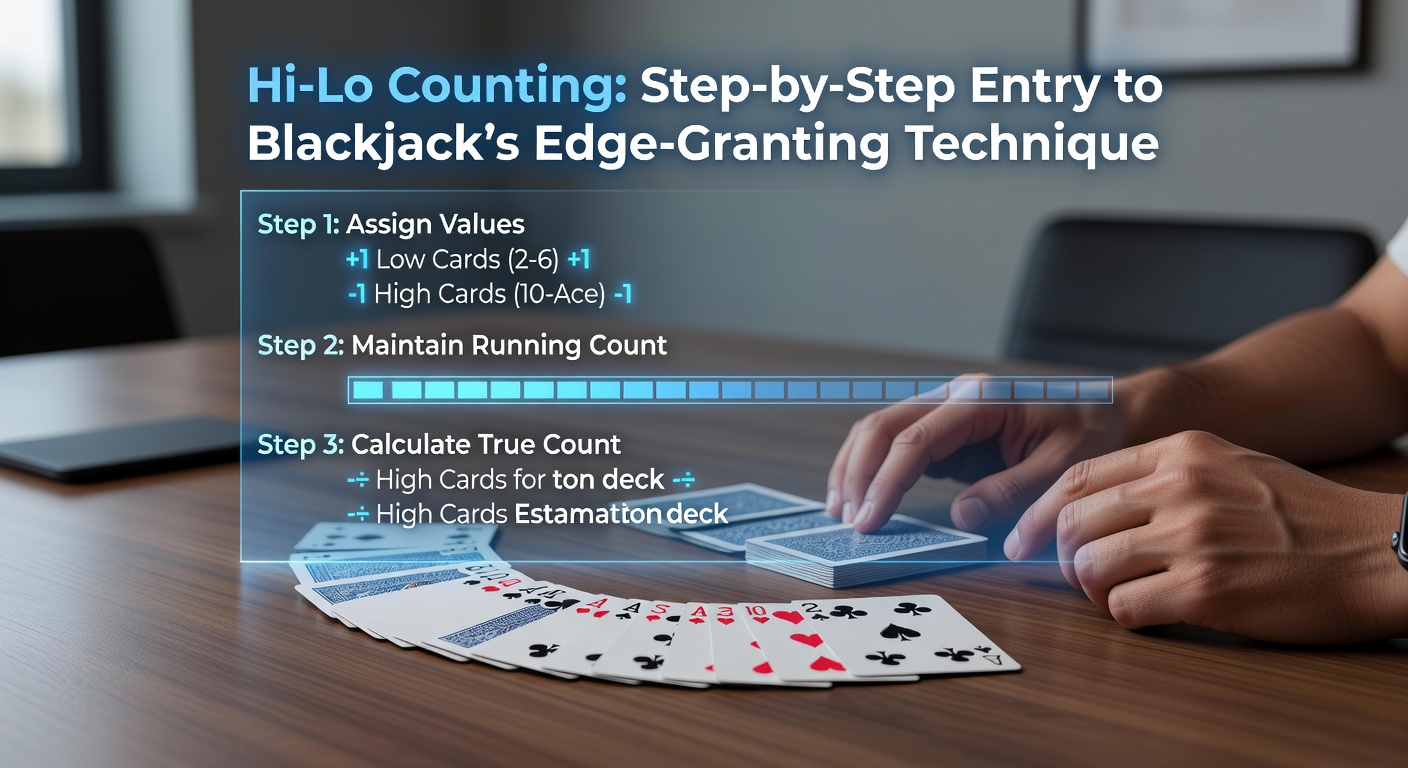
Harvey Dubner introduced the Hi-Lo system in 1963 during a convention presentation, building on earlier work by Jess Marcum and Edward Thorp, whose book Beat the Dealer first mathematically validated counting; researchers later refined it into a balanced system assigning values to cards—plus one for 2-6, zero for 7-9, minus one for 10-Aces—that balances perfectly in a single deck. Studies conducted by university mathematicians, including those at the University of Nevada, Las Vegas, confirm its balance and efficacy, showing expected returns improve markedly with accurate counts.
But here's the thing: while Thorp's initial methods used computers for validation, Hi-Lo simplified everything for human application; people who've studied its evolution often discover how it spread through MIT teams in the 1990s, netting millions before countermeasures ramped up. Now, as Australian regulators like the NSW Department of Enterprise, Investment and Trade monitor international playstyles, the system's footprint persists globally.
Core Mechanics: Assigning Values and Running the Count
Hi-Lo operates on a straightforward scale where low cards (2 through 6) get +1 because they favor the player upon removal, neutral cards (7-9) score 0 since they minimally impact odds, and high cards (10, face cards, Aces) earn -1 as their depletion boosts the house; counters start at zero with a fresh shoe, adding or subtracting mentally with each card dealt, whether to players, dealer, or busts. Observers who've timed proficient users note they process six-deck shoes at normal speeds, maintaining accuracy above 95% through practice.
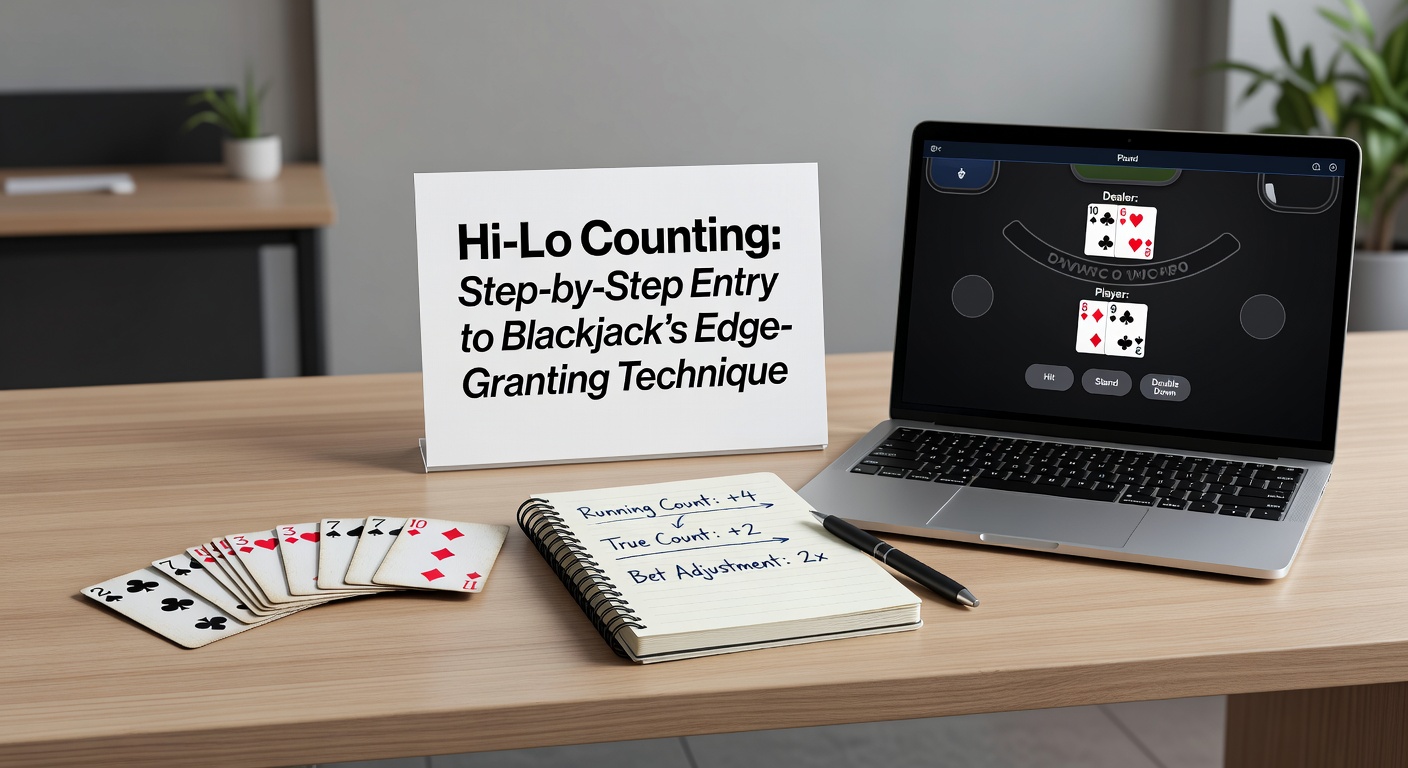
So the running count builds cumulatively—say a 2 (+1), 10 (-1), and 5 (+1) nets +1 overall—serving as the foundation before conversion; but in multi-deck games, which dominate modern floors, experts convert it to a true count by dividing by remaining decks, yielding precision for bet ramps. Data from back-tested millions of hands indicates true counts above +2 signal player-friendly shoes ripe for action.
Step-by-Step Entry: Implementing Hi-Lo at the Table
- Master Basic Strategy First: Players commit charts to memory covering hits, stands, doubles, splits; research shows this alone drops house edge to 0.5%, creating the baseline for counting overlays.
- Practice Running Count Solo: Using a single deck, deal cards face-up while verbalizing values aloud (+1 for 3, -1 for Queen), aiming for zero at end; those who've logged 100 hours report instinctive fluency.
- Introduce Bet Sizing: Flat-bet at running counts below +2, ramp to 2-5x at +3 or higher, scaling with bankroll—Kelly criterion suggests 1% risk per hand for sustainability.
- Convert to True Count: Eyeball decks left (half-gone shoe equals two decks in six-deck), divide running by estimate (running +6 over three decks true +2); accuracy here separates pros from dabblers.
- Apply Playing Deviations: Basic strategy bends at extremes—insurance at true +3 since dealer 10-up vulnerability spikes, stand on 16 vs. 10 at true +4; indices from books like Blackjack Attack guide 18 key plays.
- Camouflage Play: Vary bets gradually, chat casually, tip occasionally; casinos flag rigid ramps, but data reveals wonging (back-counting entry) dodges heat effectively.
And while steps build sequentially, integration happens fluidly during live sessions; one case study of a Nevada practice group showed members gaining 1.2% edges after 500 hours, verified via tracked sessions. Yet pitfalls abound—mental fatigue drops accuracy post-90 minutes, so short bursts prevail.
Turns out, software like Casino Verite simulates millions of shoes for drill honing; people download free trials, logging deviations until reflexes kick in automatically.
Advanced Twists and Bankroll Realities
Beyond basics, side counts on Aces refine insurance calls since Hi-Lo lumps them with tens; proficient users track separately, adjusting for the nuance. Wonging in/out at favorable counts boosts hourly win rates to $50+ on $10 minimums, although pit bosses shuttle shoes early on heat. Figures from professional trackers indicate 400x minimum buy-ins as ideal bankroll—$4,000 for $10 games—weathering 10-15x standard deviation swings.
What's significant is how team play amplifies edges, with spotters signaling big players via subtle cues; MIT alumni detailed this in memoirs, netting fortunes before busts in the early 2000s. But now, with March 2026 facial recognition rollouts in Macau and Atlantic City, solo camouflage reigns supreme.
Practice Drills That Build Proficiency
Experts recommend deck estimation drills—eye a shuffled pile, guess decks in 5 seconds; accuracy within 0.25 decks unlocks true count mastery. Group sessions mimic casino chaos, with dealers calling "speed it up" to stress-test; apps like CV Blackjack offer dealer video feeds for home reps. Those who've plateaued often switch to double-deck focus first, scaling complexity gradually.
So after 200 tracked shoes hitting 96% accuracy, table time begins at low limits; progress trackers log sessions, plotting edges via win/loss ratios.
Legality, Countermeasures, and the Modern Landscape
Card counting remains legal across US jurisdictions since no laws ban mental math, as affirmed by Nevada Gaming Control Board rulings; casinos, however, bar suspected users via trespass orders, effective post-incident. Continuous shufflers erase counts in 70% of high-limit rooms, while automatic shufflers recycle 75% of cards; data shows these slash counter edges by 80%.
Yet low-limit six-deck hands persist, especially online live-dealer hybrids where shoes run deeper. Observers note European floors lag in tech adoption, offering niches amid 2026 expansions.
Wrapping It Up: Sustainable Edges Await Diligent Counters
Hi-Lo delivers a proven, accessible entry to blackjack edges when drilled relentlessly; from value assignment to deviation mastery, steps compound into 1-2% returns for bankrolled players navigating casino scrutiny. As March 2026 surveillance sharpens globally, camouflage and discipline define success; those adhering to practice regimens and risk limits find the math holds firm, rewarding patience with consistent gains over thousands of hands.